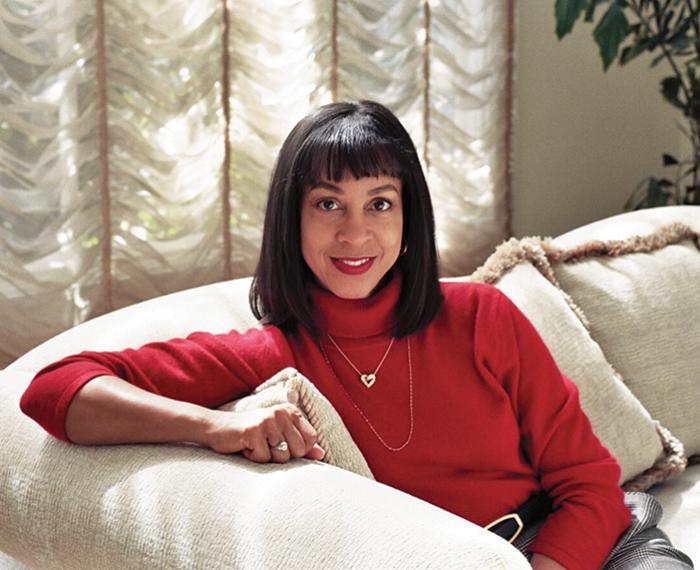
It’s National Minority Mental Health Awareness Month so we have to honor the woman who
made it all possible, Bebe Moore Campbell. If you haven’t heard her name yet, we need to fix
that.
Who was Bebe Moore Campbell?
Bebe Moore Campbell was a bestselling author, journalist, NPR commentator, and educator
whose words reached deep into American living rooms. Her novels, including Your Blues Ain’t
Like Mine, 72 Hour Hold, and the children’s book Sometimes My Mommy Gets Angry, didn’t shy
away from hard truths about race, family, and mental illness. She wrote about what a lot of Black
families were living through but rarely saying out loud.
That’s because Campbell’s advocacy wasn’t theoretical. It was personal. Her daughter was
diagnosed with bipolar disorder, and Campbell watched firsthand how stigma, cultural
misunderstanding, and a lack of culturally competent care made an already painful journey even
harder for her family. Rather than carry that weight quietly, she turned it into fuel.
Campbell co-founded the NAMI chapter in Inglewood, California, a predominantly Black
community, creating one of the first spaces where Black families could talk openly about mental
health without judgment. That chapter is known today as NAMI Urban Los Angeles.
She became a national spokesperson for mental health, using her platform as a writer and
public figure to say something radical for its time:
Mental illness is not a moral failing, and treatment is not a betrayal of your community.
It’s an act of love.
Why She Started the Push for a National Month
By the early 2000s, Campbell had spent years watching the same pattern repeat: families of
color reaching a mental health crisis without the resources, representation, or trust in the system
to get real help.
She knew data alone wasn’t moving the needle fast enough. So in 2005, she and her
longtime friend Linda Wharton-Boyd started outlining something bigger than another awareness
campaign. They wanted a dedicated, national moment that would put minority mental health on
the calendar and in the national conversation, every single year, without fail.
In her own words, delivered in 2005:
“We need a national campaign to destigmatize mental illness, especially one
targeted toward African Americans… It’s not shameful to have a mental illness. Get
treatment. Recovery is possible.“
Nearly two decades later, that message still sits at the heart of what we believe: healing is
possible if we start the conversations. Men
She Didn’t Get to See It Happen, But Her People Made Sure It Did
Bebe Moore Campbell passed away from cancer in November 2006, before the resolution
she envisioned ever reached the House floor. She started the fire, but she didn’t live to see it
catch.
That could have been the end of it. Instead, it became the beginning.
Wharton-Boyd, along with Campbell’s family, friends, and a growing coalition of advocates,
refused to let the momentum die with her. They picked up exactly where she left off, channeling
their grief into the same organizing work Campbell had already started. Two years after her
passing, their persistence paid off: in May 2008, the U.S. House of Representatives formally
recognized July as Bebe Moore Campbell National Minority Mental Health Awareness
Month. The resolution, sponsored by Rep. Albert Wynn (D-MD) and backed by a large
bipartisan group of co-sponsors, had two clear goals: improve access to mental health
treatment and services, and increase public awareness of mental illness in underserved
communities.
That’s the part of this story we want every college student, every young advocate, every
SheCare ambassador to sit with for a second: one person’s grief and refusal to quit turned
into federal recognition that has shaped how this country talks about mental health for
almost two decades. Legacy work doesn’t always finish in the lifetime of the person who starts
it. Sometimes it takes a community to carry it the rest of the way. That’s not a sad ending, that’s
the whole point.
Why It Matters Even More Now
Almost twenty years later, the disparities Campbell fought against haven’t disappeared.
Research continues to show that while nearly half of white Americans receive mental health
care when they need it, only about 31% of Black and Hispanic individuals receive the same
level of support. One in three Americans identifies as a member of a racial or ethnic minority
group, yet these communities remain significantly less likely to access treatment, and more
likely to receive lower-quality care when they do.
Bebe Moore Campbell National Minority Mental Health Awareness Month, sometimes also
referred to as BIPOC Mental Health Month, exists to hold a mirror up to that gap every July, and
to push all of us toward action instead of just awareness. It’s not simply a history lesson. It’s an
ongoing assignment.
That assignment looks different depending on who’s picking it up:
- If you’re someone who has struggled to find a therapist who actually understands your
background, your family, your church, your neighborhood, Campbell’s story is proof that
naming the problem out loud is the first act of change. - If you’re someone who has never had to think twice about whether your therapist “gets
it,” this month is an invitation to learn, listen, and use whatever platform you have the
same way Campbell used hers. - If you’re a student, an organizer, a creative, an ambassador, this month is a reminder
that advocacy doesn’t require permission. Campbell wasn’t a politician. She was a writer
with a story and a network of people who believed her. That’s often exactly how
movements start.
Carrying the Story Forward
Bebe Moore Campbell didn’t get to see July become what she imagined. Her friends and family
finished what she started, and that work is still worth telling, especially to a new generation who
may be hearing her name for the first time.
This July, we’re using our platform simply to make sure her story doesn’t get lost. If you learned
something here, pass it along. Tell a friend, a classmate, a family member. Awareness only
spreads when people choose to carry it forward, the same way Wharton-Boyd and Campbell’s
community did nearly twenty years ago.
Get support if you need it. Talk about it if you can. Recovery is possible. Bebe said that in 2005,
and it still holds true today.
Looking for a therapist or provider who understands your background?
The Let’s Talk! Resource Guide is a free directory of mental health providers and programs built
for the community
Sources
- National Alliance on Mental Illness (NAMI). “About Bebe Moore Campbell National
Minority Mental Health Awareness Month.” nami.org - NAMI Urban Los Angeles. “Bebe Moore Campbell Minority Mental Health Month.”
namica.org - Mental Health America. “Bebe Moore Campbell.” mhanational.org
- Mental Health America. “BIPOC Mental Health Month.” mhanational.org
- Steinberg Institute. “Recognizing Bebe Moore Campbell National Minority Mental Health
Awareness Month.” steinberginstitute.org - U.S. Congress. H.Con.Res.134, 110th Congress (2007-2008). congress.gov
- SMHWI. “National Minority Mental Health Awareness Month.” smhwi.com